Today I finished reading: For the love of physics by Walter Lewin. Lewin was famous for his physics lectures at MIT, particularly when they were posted online. The most iconic moment in his course was when he let a big pendulum off in front of him. The point was that it didn't swing back and smash
him in the head, because of energy conversation.
The book is enjoyable, but also a bit strange. It starts out with popular real world physics, but the second half is about his research into X-ray astronomy mostly using ballons. The last chapter is about Modern Art. He is a big collector and he has worked with some artists. I liked the way he used in the end chapter the metaphor "ways of seeing" to unify his interests in art and physics.
I was disappointed that there were not a lot of discussion of his teaching methods. It does look as though he was an inspirational teacher. In the book he reported that he gave out flowers, when he displayed Maxwell's equations on the screen. Students wrote to him to say they remember the flowers, if nothing else from the course. Students liked the demos as well.
Sunday, 17 July 2016
Sunday, 10 July 2016
Staying ahead at work
Our School is judged by the employability of our students, when they graduate. So we are always looking for ways to build in methods to make sure our teaching equips the students with useful jobs skills. One person suggested developing a system for the students to create a portfolio of their skills.
Last week I read the book "Staying ahead at work" by Karen Mannering. The subtitle of the book was: "How to develop a winning portfolio of work skills and attitudes?"
The book was more focused on people already working in a company and helping them get a promotion or a new better job. So there was a lot of stuff about getting a mentor, or a coach,
and the importance of networking. She also suggested writing an "action plan" to plan for career development and advancement. It was not particularly useful for students at University.

Towards a unified theory of problem solving
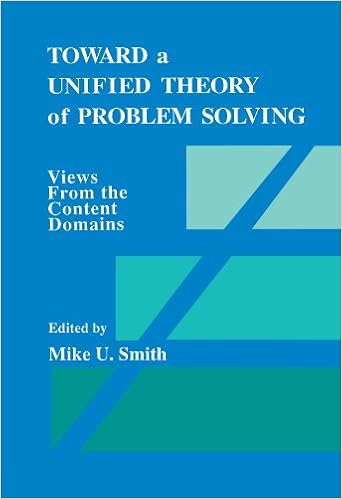
I have just read the short book: Towards a unified theory of problem solving, which is edited by Mike Smith. The book contained a set of chapters about teaching problem solving in diffferent subjects, such as:
The aim of the book was to see if there were generic methods of solving problems, which are useful for all subjects. In the end I didn't see any conclusion that there was a universal method of solving problems in any domain.
There was much discussion about the differences between the problem solving skills of experts and novices. Also there was issues about much information the students needed before they started trying to solve problems. Experts would experiment a bit more before they started to calculate. At the end of the solution of the problem, experts would think about better ways of solving the problems.
The way that TAs explained solutions to problems didn't help students to learn better problem solving techniques.
- Biology
- Chemistry
- Medicine
- Programming
- Mathematics
- Physics
- Trouble shooting (finding problems in machines).
The aim of the book was to see if there were generic methods of solving problems, which are useful for all subjects. In the end I didn't see any conclusion that there was a universal method of solving problems in any domain.
There was much discussion about the differences between the problem solving skills of experts and novices. Also there was issues about much information the students needed before they started trying to solve problems. Experts would experiment a bit more before they started to calculate. At the end of the solution of the problem, experts would think about better ways of solving the problems.
The way that TAs explained solutions to problems didn't help students to learn better problem solving techniques.
Saturday, 26 March 2016
More thoughts on using a planetarium (UKPSF A1 A2 A3 A4 K4 K5 V1)
This last semester I taught a course called the "Quantum Universe". This module was one of the new Plymouth Plus immersive modules, where the students take a 20 credit module, which last year would have been taught over a year, is now taught in a single month. The students only take this module in the month. So it is essentially a bootcamp for quantum mechanics and astronomy.
An important part of the content of the module is Astronomy. As part of the practical sessions in the module we used the Immersive Vision Theatre on campus. I was in charge of this part of the course. It was a bit of strain to develop new material for the two sessions every week. One important issue is how to make the sessions interactive, so that the students actually do something, rather than just passively watch.
Dr. Helen Goodall from Marjon reviewed one of the teaching sessions in the planetarium.
One possible system to give questions to the students is to use a system such as socrative.
This allows students to use smart phones or tablets to answer multiple choice questions. One
important issue is that not everyone will have a smart phone, so the system should allow students with no phone to contribute. This is an important diversity issue, because not everyone will be able to afford a smart phone, or they may not like them. Socrative allows tests to be downloaded. See the example below, which I created.

I have just read an old paper on using clickers
I did do a literature search on using a planetarium for teaching, but I didn't really find anything useful.
An important part of the content of the module is Astronomy. As part of the practical sessions in the module we used the Immersive Vision Theatre on campus. I was in charge of this part of the course. It was a bit of strain to develop new material for the two sessions every week. One important issue is how to make the sessions interactive, so that the students actually do something, rather than just passively watch.
Dr. Helen Goodall from Marjon reviewed one of the teaching sessions in the planetarium.
1) Further use of questioning and other
activities to encourage more participation and engagement.
2) Further use of questioning to enable you to
gauge students’ level of knowledge and understanding (to inform your future
inputs).
This allows students to use smart phones or tablets to answer multiple choice questions. One
important issue is that not everyone will have a smart phone, so the system should allow students with no phone to contribute. This is an important diversity issue, because not everyone will be able to afford a smart phone, or they may not like them. Socrative allows tests to be downloaded. See the example below, which I created.

I have just read an old paper on using clickers
in Astronomy Education Review, 2006.
There is also a book called Cosmic Perspective Clickers, which I will order. The system allows me
to see the answers submitted by the class.
Interestingly, people claim that attendance improves with the use of clickers.
What is less clear is how to use peer instruction in the planetarium environment. The dark environment and somewhat strange acoustics may make student discussions difficult.
The course is assessed via 40% online quizzes and 60% a group presentation. In the last class the questions used in the planetarium were not very relevant to the online questions, which were
based on the problems covered in the lectures. We are planning in making the online quizzes a bit harder next year, so we could build in some of the questions covered in the planetarium.
Thursday, 24 March 2016
Women in engineering (or the lack of) (UKPSF V1 V2)
I teach physics on a foundation course. The course feeds into various engineering degrees. When I look out to the audience I don't see many women students. it could be that there are less than 10% female students. I am not sure what I can do to improve this. I try to be careful to not use any sexist language, or use any examples that depend on gender. (This is not too hard when we study electrons and atoms).
It looks like there are professional societies, whose main purpose is encourage girls to study engineering. See for example: The Women's Engineering Society.
It looks like there are professional societies, whose main purpose is encourage girls to study engineering. See for example: The Women's Engineering Society.
Reviewing a lecture by a senior member of the school. (UKPSF K2 K3 K5 A5)
It is departmental policy in the School of Computing, Electronics and Mathematics at Plymouth University, that every staff member review another person's teaching, and their teaching is also reviewed. Typically, people watch other people's lectures.
This year I reviewed a lecture by a senior member of the school. As I said in the discussion part of the PGCAP course at Marjon, I find it difficult to give advice to senior members of the school. Of course, it is useful to see the teaching styles of other staff members:
Below is what I wrote. The most useful thing for me, is that I should make
it clear to the students how to use the material in the course. This is
particularly important in the course I teach in the foundation year.
What aspects of practice were identified through the peer review
process and the subsequent discussion that may be of interest /
relevance to colleagues in the School?
It was useful to see a very interactive lecture, made possible by the
existence of a booklet of notes. There were a lot of questions from
the students. I liked the way the lecturer told the students how to write notes and get the
most out of the lectures.
What developmental or enhancement needs were identified through the
peer review process?
There were some slight problems with the presentation systems at the
beginning of the lecture (mostly caused by me.) It would be better if
this didn't happen. It is not a big deal, but it would make the lecture look more professional.
Any other comments / points raised that you wish to capture please
note these in the section below:
Although it was a great lecture -- it was essentially revision of
material taught at a school. Perhaps it would be helpful to the students to make use of
the revision and support material from the mathcentre.
Some thoughts on giving feedback to students. (UKPSF: A3 A4)
This last semester I have been teaching in a computer lab with a lecturer and another person. The students are given problems to do in either the computer algebra package called Maple, or the numerical package: Matlab. If the students have problems I go over and help them. I believe that this is giving feedback to the students. However, it is not clear that the classification scheme used by the PGCAP people would regard my activities as formative assessment, or providing feedback.
The lecturer collected, from students who wanted to, some of their programs. He promised to give them feedback on them. It is nor clear how effective this type of feedback is. He could only check that the format of the programs accords to his style guide. For example, he could check that the program has enough comments.
I sometimes get students to email me programs, when I can't debug them in front of them
Wednesday, 23 March 2016
Itunes Univerity (UKPSF: A1,A4,K4)
In the School of Computing, Electronics and Mathematics we give each a student an Ipad mini, to help with their learning. The Itunes University is one way to deliver content to the students in format that is suited to the ipad mini. Last week, Dr Nick Outram presented a tutorial on using the ItunesU course manager. to create courses.
It looked like a convenient way to deliver notes to the students. I don't like the way pdf documents are displayed on the Ipad. It looked like a good way to combine video and text in a more coherent way than the Moodle system we use to store all of our teaching material.
There was a way to input mathematics into the Ibooks system using standard latex format. Looking online afterwards, it is not clear how complete the coverage of latex syntax is. Also there is a lot of material in latex format. It looks difficult to convert a big latex document to Itunes format. I believe that the students could annotate the documents.
Nick had used the Itunes course manager for a number of courses. It had been popular with the students.
I think I might use this course in the new mathematical programming module, which I am teaching next year. One of my tutorial students told me he was disappointed that the Ipads were not used more.
Do styles of learning exist? (UKPSF: K3,K5)
I recently attended an interesting talk by one of the third year student's at Plymouth. The talk was based on her experiences on a placement teaching in a school.
She used some ideas of "styles of learning" in her teaching. This was impressive, because I don't believe that there is any theory taught in that module.
I have a book called "Martial Arts Instruction" by Lawrence Kane. He uses the Myers-Briggs MBTI indicators to classify students. I am a bit doubtful about this, because the underlying basic idea came from psychoanalysis such as Jung. In the first chapter he breaks learners into auditory, kinesthetic and visual learners. However, he doesn't provide any references, but just assumes that this classification is true.
For example , a kinesthetic learner prefers to learn by touching. It might be clear how to teach elementary mathematics by a tactile method. For example a student could count out objects when they are learning about addition. It is less clear how to learn about more abstract topics, such as complex numbers and partial differential equations. In the book "Why Don't Students Like School?: A Cognitive Scientist Answers Questions About How the Mind Works and What It Means for the Classroom," by Daniel T. Willingham, he points out that given that the idea is
for the student to convert a concept into an internal cognitive schema, then the learning style may have little influence on learning of abstract concepts.
There is paper called: should we be using learning styles which reviews the evidence for learning styles. It is a long paper, but seems to be a comprehensive review. It is also very readable. The key points I got out of it were:
My conclusion is that there needs to be much better studies of the effectiveness of the different learning style models, before I need to use them.
She used some ideas of "styles of learning" in her teaching. This was impressive, because I don't believe that there is any theory taught in that module.
I have a book called "Martial Arts Instruction" by Lawrence Kane. He uses the Myers-Briggs MBTI indicators to classify students. I am a bit doubtful about this, because the underlying basic idea came from psychoanalysis such as Jung. In the first chapter he breaks learners into auditory, kinesthetic and visual learners. However, he doesn't provide any references, but just assumes that this classification is true.
For example , a kinesthetic learner prefers to learn by touching. It might be clear how to teach elementary mathematics by a tactile method. For example a student could count out objects when they are learning about addition. It is less clear how to learn about more abstract topics, such as complex numbers and partial differential equations. In the book "Why Don't Students Like School?: A Cognitive Scientist Answers Questions About How the Mind Works and What It Means for the Classroom," by Daniel T. Willingham, he points out that given that the idea is
for the student to convert a concept into an internal cognitive schema, then the learning style may have little influence on learning of abstract concepts.
There is paper called: should we be using learning styles which reviews the evidence for learning styles. It is a long paper, but seems to be a comprehensive review. It is also very readable. The key points I got out of it were:
- If students do learn with different learning styles, then because Plymouth University is committed to teaching a diverse range of students, then this should be taken into account.
- There are a wide range of different theories about learning styles to choose from. It is not clear which theory is best, or even if a theory is correct.
- There are no good empirical studies which test the different learning style models.
- One way to determine your learning style is to take a questionnaire. There are commercial companies, which create these questionnaire. There is a lot of money to be made. Particularly, if these methods are used to hire people.
- It can be a problem, if student is "diagnosed" as one type of learning. For example, if they decide they are a kinesthetic learner, then they may just assume that they will learn nothing from a set of lectures.
- Even if a teacher finds out that a class of students has many different learning styles then somehow the teacher should teach the same material in many different ways to appeal to the spectrum of the classes learning styles.
- Rather than focusing on what learning style a student has, it is probably much better to get the student to think about the way they learn -- to try and optimize the process.
My conclusion is that there needs to be much better studies of the effectiveness of the different learning style models, before I need to use them.
Saturday, 19 March 2016
More thoughts on using the whiteboard (UKPSF: K4)
I was happy with teaching using a combination of slides and writing on the whiteboard. However, it is clear that I can't depend on having a whiteboard available to me in rooms I am scheduled to teach in.
There are some studies of the effect of using the whiteboard versus an interactive whiteboard.
There are some studies of the effect of using the whiteboard versus an interactive whiteboard.
- For example, this paper discusses writing on the whiteboard in relation to the cognitive structure of the students.
- There are some studies of comparing using the white board versus an interactive white board. For example, here and here .
podcasting (UKPSF: K4, K3, A4)
I am teaching a foundation year course in Physics. The topics are essentially electromagnetism and a bit of quantum theory. I mostly use slides to present the material, but I like to work problems on the white board. Unfortunately, this year I am in a room with no board. There is a visualizer, where I can write on the screen. Unfortunately, I can't actually see the screen very well, because it is on the wrong side of the podium. My handwriting is not good and the poor set up of the visualizer is making things worse. One of the students complained to me about my handwriting.
I want to try to use my Ipad, the department gave me, to project from the Ipad to the screen. One possible App is called: Explain Everything. I have not yet got a cable to connect my Ipad, but I have been playing with the above App. One of the students asked if I was going to make any podcasts.
Below is my first podcasts.
The myth of Humoldt and education (UKPSF: A5,V4)
In the PGCAP literature I quite often see references to Humboldtian model of higher education . For example in the book:
People like this type of Education model for Universities, because it
involves research with undergraduate students and stresses liberal
arts values.
It is never clear how accurate the scholarship is of Humboldtian educational values are. I have read the paper: Bachelor of What, Master of Whom? The Humboldt Myth and Historical Transformations of Higher Education in German-Speaking Europe and the US by Mitchel Ash. This paper looks as the author has a better grasp of the material than many people in the PGCAP community.
Mitchel claims that the principles below are the basic ideas of the Humboldtian educational values.
The paper ends with a discussion of the Bologna process on trying to create a common standard of University education across Europe.
Given that Humboldt's ideas, if they existed at all, only worked for a University with only 1% of the population, in a system where there were no undergraduate degrees.
Enhancing Learning And Teaching In Higher Education: Engaging With The Dimensions Of Practice edited by John Lea, there is a discussion piece by Mike Neary.
Mike is very much against teaching as the transmission of knowledge. He is impressed by foundation and guiding principles, of the University of Berlin in 1812, by Humboldt and others. He wants the students to essentially just do independent research projects.
He is also worried by the separation of research and teaching.People like this type of Education model for Universities, because it
involves research with undergraduate students and stresses liberal
arts values.
It is never clear how accurate the scholarship is of Humboldtian educational values are. I have read the paper: Bachelor of What, Master of Whom? The Humboldt Myth and Historical Transformations of Higher Education in German-Speaking Europe and the US by Mitchel Ash. This paper looks as the author has a better grasp of the material than many people in the PGCAP community.
Mitchel claims that the principles below are the basic ideas of the Humboldtian educational values.
- Freedom of teaching and learning. Students had as much right to choose their instructors and subjects as professors had to decide what and how they taught.
- The unity of teaching and research. He thought that learning is a collaborative enterprise, in which ‘the professors are not there for the students, but rather both are there for science.
- The unity of science and scholarship.
- The primacy of ‘pure’ science over specialized professional training.
- In his article Mitchel notes that Humboldt's writings on education were unpublished, so were not very influential for a long time, because no one knew about them. His writings were only rediscovered at the end of the 19th century and were used as motivation to reform a system, he had helped to found. The article claims that PhDs were only started to be awarded at the end of the 19th century. Also, it should be remembered that this educational system loosely based on Humboldt's idea, was run, when only 1% of the population attended University, rather than the mass education system we have now.
The paper ends with a discussion of the Bologna process on trying to create a common standard of University education across Europe.
Given that Humboldt's ideas, if they existed at all, only worked for a University with only 1% of the population, in a system where there were no undergraduate degrees.
Thursday, 17 March 2016
Adding simulations to physics lectures (UKPSF: K1, K2, K4,A1)
In the School of Computing, Electronics and Mathematics, the rule is that a teaching activity is reviewed by another member of staff one a year. Last year, in my course on foundation level physics was reviewed. The lectures were on the topic of alternating current . The lectures notes I am using have been used for over 5 years and were not written by me. Normally they contain many inline exercises that the students can work through in class.
Unfortunately, the lectures on alternating current didn't contain many inline exercises. Also I started the lecture with a long review of what we did in the previous lecture. I didn't put in too much detail in the review, because that had been covered in the first lecture on the topic. The reviewer didn't like the lecture too much, because it wasn't very interactive. Also he wanted more background information for the review material.
I am going to rewrite some of the material on the alternating current. I have started to use a set of web based simulation codes called PHET from the University of Colorado. In principle these can be used to explore questions with the students. One direction the work on reviewing alternating current can go, is to look at Electromagnetic waves. The simulations are designed using ideas from Physics Education Research. For example, they use "think aloud" techniques to find out how the students approach problem solving.
One way to understand electromagnetic waves is to first start with waves on a string, so this simulation can be used.
Wednesday, 17 February 2016
Undergraduate research (UKPSF: A5, K6)
My research area is lattice QCD, a sub-field of theoretical particle physics. The University is keen for students to be involved in research. However, the background to my research requires an understanding of quantum field theory and Lie group theory, as well as expertise in high performance computing. We don't teach these subjects at Plymouth, so the students don't have the background knowledge.
The professional bodies for mathematics has a document describing what mathematics undergraduates should learn on a degree. Actually it is the quality assurance body in the UK. The document is actually very vague to what knowledge and skills is expected to be learned by the students. The statement about the level of knowledge is interesting.
This is consistent with the above quote from the subject benchmark.
This post concerns A5 and K6 from the UKPSF.
The professional bodies for mathematics has a document describing what mathematics undergraduates should learn on a degree. Actually it is the quality assurance body in the UK. The document is actually very vague to what knowledge and skills is expected to be learned by the students. The statement about the level of knowledge is interesting.
An important further source of diversity is, in many cases, the influence of theWhen I was talking to a colleague about this, he told me that no one really believes that undergraduate students can not do research into mathematics, but what we can do is research informed teaching.
research and professional interests of academic staff. While undergraduate programmes in mathematics, statistics and operational research are not generally expected to reach the
frontiers of knowledge, it is a stimulating experience for a learner to be taught a subject by someone who is an active researcher or professional in the field. The choice of material presented in mathematics, statistics and operational research programmes, while mainly determined by its educational value, is nevertheless often influenced in detail by the research and professional interests of the academic staff.
This is consistent with the above quote from the subject benchmark.
This post concerns A5 and K6 from the UKPSF.
Tuesday, 16 February 2016
Slides versus booklets (UKPSF: A1, A2, K2, K4)
At the staff student committee for one of the courses I teach, the students asked about the booklet for the course. In the earlier course, they are given written notes, like a mini text book for the course. I do put my slides on Moodle. And now I have started taping the course with the new lecture capture system, which has been installed in some of the lecture rooms, here at Plymouth University.
In this post, I discuss some of the issues, with this feedback from the students.
I was an undergraduate student in the middle 80s and a graduate student in the early 90s. The lecturer would write on the board and we would copy that down. I can only remember one person who used computer made slides. He claimed he had some kind of shoulder problem, so he couldn't write on the board. I really enjoyed his lectures, but that was because they were on group theory. Essentially us students would copy from the board the notes.
When I first presented some lectures at Liverpool, I was given some notes with a bit of theory in them and some examples. I would write them on the board and the students would copy them down. I did some small experiments with latex slides for a couple of weeks, but it was too much work to prepare. When I was a tutor at Glasgow for the second year physics students, I noticed that most lecturers were putting slides on Moodle.
However, at Plymouth, for the first course, I was given a booklet of notes. It wasn't very clear what I was meant to do with it. The students would get the notes and then I would write them on the board as well. Now that I watched a couple of staff lecture, it is clearer what is happening. The lecturer, presents some examples and a bit of theory, in a similar manner to what is in the notes. But the notes are the definitive copy of the material. There is always some interactive part of the class, where a basic problem is set.
Last year, I talked to teaching staff at Liverpool and Edinburgh. They are still presenting material in the traditional write on the board model.I was told, that some of the staff in the Mathematical Sciences Department at Liverpool, were told by students, that they prefer the black board methods over powerpoint.
What I don't like about the use of the notes, is the presentation material is not always logically presented. The lectures have always been engaging, but in one I watched, the entire class had problems solving a very basic question.
The course I am teaching has never had a course booklet, so I don't have time to write a book.
I will try and write something based on the basic equations needed in the course.
This post deals with A1, A2, K2 and K4 from the UKPSF
Wednesday, 3 February 2016
Using a planetarium (UKPSF: A1, A4, K4)
I am one of a team of people, who are teaching an immersive module called the Quantum Universe. We are using a planetarium on campus for the lab sessions. Actually, it is called the Immersive Vision Theater. See the picture below:

This is the first time. This course has been run, so we have no experience with using the planetarium for teaching. I did a quick literature search and found this paper:
The Effect of Planetariums on Teaching Specific Astronomy Concepts
The paper uses a multiple choice test on groups of students, who did and did not, have access to the planetarium. They found that there was a statistical improvement in 3D thinking for the students who had access to a planetarium compared to those who were taught in a classroom.
On reflection I will use some of the multiple choice questions coupled with the demonstrations in the planetarium.
Tuesday, 2 February 2016
Notes from a physics education meeting (UKPSF: K1, K2, K5)
Just before Christmas, I attended a meeting in London about Physics
Education Research (PER). The meeting was organized by the PhysicsEducation group of the IOP. The meeting was really about people
trying to start to do research into Physics education, rather than to
disseminate the results for people trying to teach. Do I intend to do
Physics Education research at the moment? Well no, but I still enjoyed
the meeting. Part of the reason I am not interested is that I need to
do more background reading on research methods.
During the questions and the few lectures, there were some discussions
about traditional physics research versus physics education research.
There was very little jargon from the PGCAP / HEA communities. I don't
think I remember anyone talking too much about "reflection" and peer
learning, and the other silver bullets loved by the HEA people.
The starting talk was a discussion of what PER is? The first thing
suggested was to write a question. The example given was whether there are
gender differences in problems solving. However, there was some
discussion about whether the first thing would be to write down
the motivation for the question.
There was a lot of discussion about trying to understand what the
students were thinking There was some discussion of research methodologies. Do we need to use
techniques from social sciences?
In a comment, someone noted that Nottingham Universities once had a
time with no exams in the 4th year. One guy claimed the students were
much better as PhD students.
Many people have used open book exams. There was a feeling that the
students found them harder than normal exams.
There was an idea called triangulation.
This is where more than one technique is used to assess a method.
Also Ross mentioned a technique where students articulated what they
did. Someone noted that this may actually change what may be measured.
One person noted that, in the past when students worked on
Fermi problems, the students would actually try to do the
back of the envelope calculations. However, students will
now try to estimate problems, such as "how many piano tuners
are needed in Sydney?", by firing up google. (Actually this is what
I do as well). As one person pointed out, this is actually a
legitimate technique. A textbook was recommended
College Physics by Eugena Ethina. However, this turned out to be very
expensive at 160 pounds.
Some PER journals:
European Journal Of Physics
American Journal of Physics
Physical Review Special edition
There will be a new journal for physics education. The journal is
revived from an old HEA journal. New directions will be
restarted. It will be a positive experience, where the referees help
the authors improve the paper, rather than just reject.
What I learned from the meeting was that there are social sciences techniques for evaluating teaching techniques. I have purchased a couple of books, so I can learn about them.
Sunday, 31 January 2016
Large US textbooks (UKPSF: K1, K2, A4)
I am just updating my lecture notes for my foundation course in Physics. I got the original notes from the people who taught it four years ago. I am now adding a summary at the beginning and a summary at the end. I have added a few more questions in the notes. I thought I was utilizing some of the ideas from Physics Education research.
But now when I look at the results, my notes are starting to look like one of those big American text books on physics, such as University Physics with Modern Physics by Young et al. There is always a summary of basic equations, and little boxes with equations. These textbooks essentially contain all topics in an introductory course in Physics. I don't remember using that kind of text book, when I was a undergraduate student at Imperial College. Each lecture would recommend different more specialized textbooks, such on waves.
It could be that the British way of using books is used, because the level of the courses was higher, so a large comprehensive book didn't contain enough information. My understanding is that, these big introductory courses were unpopular with the students.
Saturday, 30 January 2016
Excel certification (UKPSF: V4, K1)
One of my colleagues went to visit a placement student in London. He found that the most useful thing that the student had learned on their mathematics degree was a familiarity with the spreadsheet package Excel. I had the same experience.
We do teach some Excel to the students, but because the staff don't like to use it, apart from entering marks, we don't perhaps teach as much as we should. Excel is really rubbish at plotting histograms, so that biases me against it. Also a useful data analysis package only existed for Windows.
My colleagues suggested that we look into getting the students to take some exam to get Excel certification. Now that I have done a quick web search, I see that Microsoft actually off a number of certification exams. I have seen a University in the USA off certification in the SAS statistical language, but we don't use it because it is expensive. It is not clear to me that a University department should be also be certifying students in Excel. It might be hard to organize. It is not clear how to pay for the student's exam. Also the exams are taken at special places.
We do teach some Excel to the students, but because the staff don't like to use it, apart from entering marks, we don't perhaps teach as much as we should. Excel is really rubbish at plotting histograms, so that biases me against it. Also a useful data analysis package only existed for Windows.
My colleagues suggested that we look into getting the students to take some exam to get Excel certification. Now that I have done a quick web search, I see that Microsoft actually off a number of certification exams. I have seen a University in the USA off certification in the SAS statistical language, but we don't use it because it is expensive. It is not clear to me that a University department should be also be certifying students in Excel. It might be hard to organize. It is not clear how to pay for the student's exam. Also the exams are taken at special places.
Student understanding of electostatics (UKPSF: A1 K1 K2 K3)
The first lecture of Physics II is on Monday. The subject is on electrostatics and a starting to look at currents in electricity. So the first example is rubbing amber and it becoming charged.

This was know to ancient Greeks. This is a good way to introduce charge. However, I don't fully understand the mechanism, behind how the charge is separated. The mechanism is not discussed in any standard textbooks. It looks as though the physics is called: triboelectric effect.
This is what the great Feynman says:
When I read a few chapters of Five easy lessons by Knight, I see that from Physics Education Research, that many students really only learn the algorithmic nature of the electricity problems. They don't really understand physical principles, such as charge conservation. Also, from the
research quoted in the book -- they don't really understand important things such that an insulator can get charged.
When I was reading a paper called Matter and Interactions by Chabay et al. they claim that the syllabus needs to be made more modern. And that the atomic theory should be used more. They have written a text book, where they use a more modern approach to physics and not this is complementary to physics education research.

This was know to ancient Greeks. This is a good way to introduce charge. However, I don't fully understand the mechanism, behind how the charge is separated. The mechanism is not discussed in any standard textbooks. It looks as though the physics is called: triboelectric effect.
This is what the great Feynman says:
Yet in all our long and involved discussion we have never explained why it is thatTo really understand the basic physics of static electricity requires that the students know about atoms. I will briefly discuss atoms and things later on in the course, so now is probably not a good time to add much more detail.
when we rub a piece of amber we get a charge on it. So you see, this physics of ours
is a lot of fakery -- we start out with the phenomena of lodestone and amber,
and we end up not understanding either of them very well.
When I read a few chapters of Five easy lessons by Knight, I see that from Physics Education Research, that many students really only learn the algorithmic nature of the electricity problems. They don't really understand physical principles, such as charge conservation. Also, from the
research quoted in the book -- they don't really understand important things such that an insulator can get charged.
When I was reading a paper called Matter and Interactions by Chabay et al. they claim that the syllabus needs to be made more modern. And that the atomic theory should be used more. They have written a text book, where they use a more modern approach to physics and not this is complementary to physics education research.
Subscribe to:
Posts (Atom)